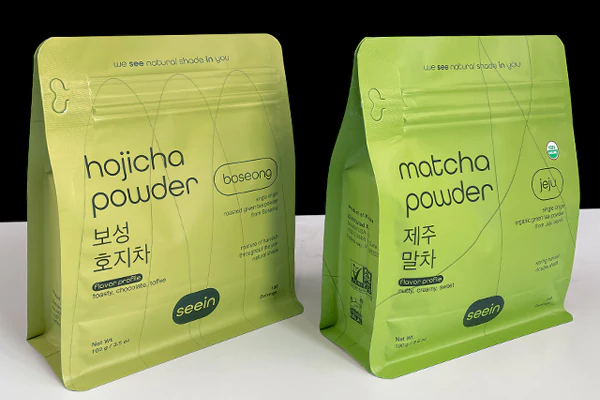
Personalized coffee packaging can attract more customers by making a product easier to recognize, understand, gift, and remember. The National Coffee Association reported in 2026 that 66% of American adults drink coffee daily and 73% drink it weekly, while specialty coffee reached 58% of adults on a weekly basis. In a category purchased this often, packaging has repeated contact with buyers at home and in stores. A 2024 study involving 263 coffee consumers also found that graphic design affected product impressions more strongly than packaging material. Personal names, roast-specific graphics, clear tasting information, limited editions, and useful sustainability labels can therefore influence purchase interest without changing the coffee itself.
Coffee packaging competes for attention before a buyer can smell or taste the beans, so the printed surface has to explain the product within a short viewing period. In the National Coffee Association’s 2024 data, 67% of U.S. adults had consumed coffee during the previous day, compared with 49% in 2004. The large repeat-purchase population gives roasters many opportunities to use packaging as a familiar brand reference rather than relying on paid advertising every time a customer returns.
That familiarity works better when personalization helps shoppers sort products instead of adding decoration. A roaster selling six coffees could keep the same logo position, bag format, and typography while changing one visual field for origin, roast, or flavor family. A 2024 peer-reviewed study of 263 coffee consumers comparing different package materials and graphics reported that graphic elements had more influence on impressions than material differences, supporting the use of readable visual variation for product selection.
A personalized coffee bag should answer ordinary buying questions quickly: Who roasted it? Where is it from? How dark is it? What does it taste like? When was it roasted? How should it be brewed?
Once identification is easy, personalization can move from product sorting to personal relevance. A first name, short gift message, subscription number, café location, or event date costs far less to change in a digital print workflow than redesigning an entire package. In 2024, specialty coffee reached 45% of U.S. adults on a past-day basis, up 80% from 2011, so roasters are selling to a larger audience that is already accustomed to origin names, brewing styles, seasonal releases, and smaller product distinctions.
Personalization can also help customers understand why two bags from the same roaster are different. Instead of placing long marketing copy on the front, the package can use structured fields such as origin, producer, variety, process, altitude, roast date, and flavor notes. Coffee buyers who compare a washed Ethiopian coffee with a natural Brazilian coffee can see useful differences without reading a full brand story, leaving the back panel for farm information or preparation guidance.
A practical information order can look like this:
-
Front: brand, coffee name, origin, roast level, two or three flavor notes.
-
Side: roast date, weight, batch or lot reference, storage instructions.
-
Back: producer information, processing method, brewing guidance, disposal instructions.
-
Variable area: customer name, gift text, seasonal artwork, QR destination, or subscription message.
The value of that structure increases when a roaster sells online, where customers cannot handle the bag before purchase. NCA data published in 2026 shows that 82% of past-day coffee drinkers prepare coffee at home, while 28% have coffee prepared away from home. A bag may therefore sit in a kitchen and be handled repeatedly for days or weeks, giving clear branding and personalized details more exposure than a single online advertisement.
Repeated handling also makes usability part of the design. A custom illustration cannot compensate for a closure that fails, an unreadable roast date, or a bag that loses freshness after opening. Roasted coffee is sensitive to oxygen, moisture, heat, and light, so customization has to fit around suitable barrier properties, dependable seals, and, where required, one-way degassing valves. Premium visual treatment works best when the package still opens cleanly, stands securely, and reseals without effort.
| Packaging element | Useful personalized variation | Business purpose |
|---|---|---|
| Front artwork | Origin, season, artist series | Distinguish products |
| Variable print | Name, message, order number | Gift and subscription use |
| Information panel | Process, altitude, roast date | Support product comparison |
| QR code | Brew guide or producer page | Add information without crowding |
| Material message | Disposal instructions | Reduce disposal confusion |
Material choice becomes more relevant when a brand presents environmental claims. McKinsey’s 2023 U.S. packaging survey found that 43% of consumers considered environmental impact extremely or very important when evaluating packaging, yet around 70% reported limited or no understanding of local sustainability rules. A coffee bag labeled simply “eco-friendly” gives little useful information; a clearer package identifies the material, the disposal route, and whether access to an appropriate collection or composting system is required.
Compostability needs especially careful wording. The Sustainable Packaging Coalition summarized research showing that 60% of surveyed U.S. consumers described compostable packaging as very or extremely environmentally friendly, while a European survey found that 50% would buy a product because of compostable packaging. Brands considering compostable packaging pouches should still state whether the package is intended for home or industrial composting and give disposal instructions that match the material specification.
Environmental wording should describe what a customer can actually do with the empty package, not ask the customer to interpret a broad sustainability claim.
Price also limits how far packaging claims can influence a purchase. McKinsey’s 2023 survey found that price, quality, and convenience remained the leading buying considerations, even though around half of U.S. consumers said they were willing to pay more for sustainable packaging. Across surveyed product categories, about 50% accepted a 1–3% premium, roughly 25% accepted 4–7%, and only 4–7% were willing to pay more than 10%.
Personalization therefore needs a cost structure suited to the order size. A 10,000-unit everyday coffee line may use one standardized printed pouch with variable labels, while a 200-unit wedding order can justify individual names or event dates. Digital printing is well suited to shorter runs because artwork can change between batches without requiring every version to carry the inventory levels expected from a large conventional print run.
Gift packaging provides another reason to use short runs. Coffee that normally functions as a household grocery item can be sold for birthdays, weddings, employee gifts, hotel welcome packs, or client orders when the outer presentation carries a name or message. With 66% of U.S. adults drinking coffee daily in 2026, gift sellers are working with a product that recipients are already likely to know how to use, reducing the explanation required for unfamiliar specialty items.
Seasonal personalization can serve the same purpose without individual names. A roaster can keep the same bag specification and change a sleeve, label, illustration, or printed message for a December release, summer cold-brew series, anniversary, or farm-specific lot. Numbering a release, such as 184 of 500, gives customers a clear production limit and lets the roaster test a design on a small run before using it more widely.
QR codes extend the limited space of a coffee bag when they lead to something useful. In 2024, 66% of Americans aged 25–39 had consumed specialty coffee during the previous week, according to NCA research. For an audience comfortable moving between physical products and phones, a scan can open a precise brew recipe, producer interview, reorder page, batch information, or subscription preference page without placing several paragraphs of small text on the package.
Personalized subscription packaging can use the same principle with customer history. Instead of printing a generic “thank you,” a roaster can identify the coffee as shipment 6 of a subscription, note a previous roast preference, or include a brew suggestion based on the current bag. NCA reported in 2024 that specialty coffee drinkers averaged 2.8 cups per day, compared with 1.8 cups for traditional coffee drinkers, providing frequent use occasions for subscription brands serving that segment.
Retail personalization should remain simpler because a shelf shopper has less context. Color families can separate light, medium, and dark roasts; numbered systems can distinguish intensity; origin illustrations can separate regions; a consistent logo and package shape can keep the range visually related. An industry survey reported by Amcor in 2024 found that close to 70% of respondents had at least sometimes purchased a product based on packaging alone, showing why visual consistency and product distinction need to work together.
Overdesign can reduce clarity. If five typefaces, several badges, long origin stories, sustainability claims, flavor wheels, awards, and QR prompts all compete on a 250-gram bag, the customer has to search for basic information. A more usable design reserves the strongest visual space for brand, product identity, and coffee description, then moves supporting material to secondary panels.
The same restraint should apply to personalization itself. A customer name is useful for gifts and subscriptions but unnecessary on every supermarket SKU; a farm illustration helps an origin-led specialty range but may add little to an office coffee product purchased by the case. Personalization earns its place when it improves recognition, comparison, gifting, repeat use, or product information rather than simply increasing the amount of printing on the bag.