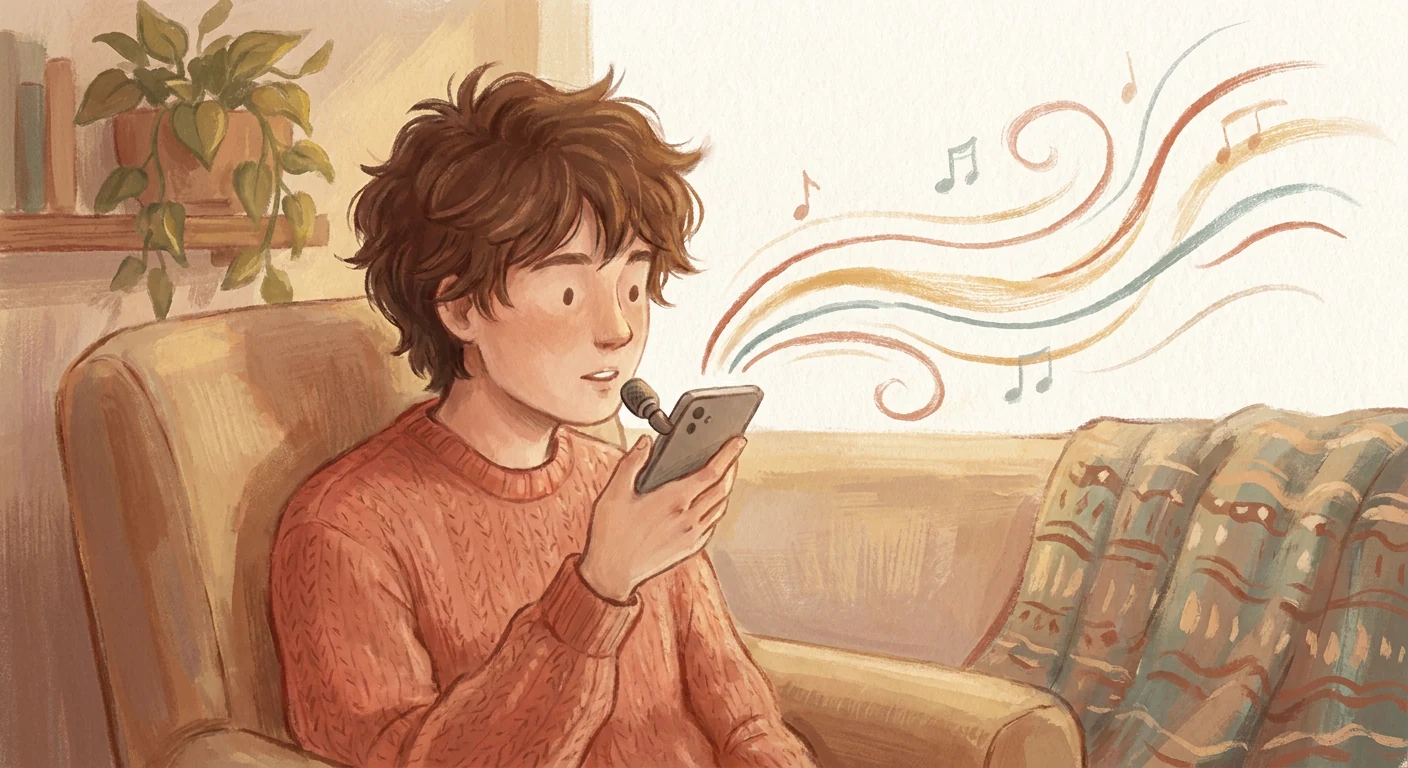
For couples, Gift a Song AI offers something ordinary gifts often cannot: a piece of music built from shared dates, places, jokes, and memories. In 2024, the global recorded-music market grew 4.8%, while streaming represented 69% of recorded-music revenue, according to IFPI. Music is already part of everyday digital life, but AI tools let couples move from listening to creating. A song can mention a first date, a 2019 road trip, a proposal location, or a private phrase. The useful part is specificity: the recipient hears details that could not reasonably belong to thousands of other couples.
Choosing a romantic gift becomes harder after several birthdays and anniversaries because familiar categories repeat. Flowers, restaurant bookings, watches, fragrance, and clothing can still work, but they usually start with an existing product. A personalized song starts with information about two people. In a 2020 study involving more than 1,900 participants, researchers studying experiential and material purchases found important differences in how experiences affect social connection, helping explain why memory-centered gifts can feel different from another object.
That distinction matters when someone is searching for a good gift ideas for boyfriend. Instead of choosing primarily by price, brand, size, or delivery date, the giver can work with a first-meeting location, a favorite trip, an anniversary date, a nickname, and a sentence the recipient often says. Five accurate details usually provide more usable lyrical material than a long prompt filled with generic phrases.
A line about “our first summer together” is broad. A line about missing the 8:15 train after a first date in Boston gives the song a scene, a time, and a place.
Scenes matter because autobiographical memory is strongly associated with contextual information. A 2013 study of 32 participants published in Cerebral Cortex examined music-evoked autobiographical memories and found that familiar music can bring back personally significant episodes and emotions. A custom relationship song adds another layer: instead of attaching an existing song to a memory later, the lyrics can be written around the memory from the beginning.
Music also has unusually high repeat use compared with many romantic gifts. IFPI's Engaging with Music 2023 report, based on more than 43,000 people across 26 countries, found that respondents spent an average of 20.7 hours per week listening to music. A personalized track fits an activity people already repeat during commuting, cooking, exercising, driving, and relaxing rather than asking the recipient to create a new habit.
That repeatability changes how couples can use the gift. A birthday song may be played once during the surprise and later added to a personal playlist. An anniversary track can return every year. A proposal song can later appear in a wedding video. A track created in 2026 may still carry the voice, language, places, and concerns of that stage of the relationship when it is replayed in 2036.
The emotional effect should not be confused with AI novelty. Research published in Nature Neuroscience in 2011 used PET and fMRI with 8 participants and found that pleasurable responses to music were associated with dopamine release in the striatum. Gift software does not guarantee the same response, but the research helps explain why music can carry emotion differently from a written product description or printed greeting card.
The practical advantage is access. Producing a conventional original song may involve a lyricist, composer, vocalist, instrumental recording, editing, mixing, and mastering. AI-assisted creation reduces the number of specialist steps a couple must personally perform. Someone who has never played an instrument can describe the story, choose a musical direction, review the lyrics, and revise inaccurate lines.
| Input | Weak version | More useful version |
|---|---|---|
| First meeting | “We met years ago” | “We met at a Seattle coffee shop in October 2021” |
| Travel | “We love traveling” | “Our first overseas trip was Lisbon in 2023” |
| Personality | “He makes me laugh” | “He tells terrible movie jokes during Sunday breakfast” |
| Milestone | “We have been together a long time” | “Our fifth anniversary is September 14, 2026” |
| Future | “I want us forever” | “I want more December road trips and Sunday mornings” |
The table also shows why the human input still matters. AI can arrange supplied information, but it does not automatically know which Saturday morning, restaurant, missed flight, dog walk, or family dinner mattered most. In 2023, researchers studying generative AI and creative work with 453 professionals found that access to generative AI substantially increased productivity on suitable writing tasks, yet users still had to provide direction and evaluate the result.
For couples, evaluation is particularly important because a factual mistake can damage the effect quickly. If the first date happened in Portland in 2020, a lyric placing it in Seattle in 2021 should be corrected. If a nickname is private, the giver should decide whether it belongs in a song that might later be played around friends or relatives. Personalization works best when every specific detail is intentionally included.
Privacy deserves the same attention. A romantic prompt can contain full names, birthdays, addresses, workplaces, travel dates, health information, or private relationship history. Couples rarely need all of that information to create recognizable lyrics. A first name, city, month, memorable event, and several personal details may provide enough material without entering an exact home address or other unnecessary identifying information.
Before submitting a prompt, remove any detail that would feel uncomfortable appearing in an email, stored account history, or shared audio file.
That approach became more relevant after generative AI use expanded rapidly in 2023 and 2024. The Stanford AI Index 2024 reported that generative-AI investment reached $25.2 billion in 2023, nearly eight times the 2022 level. More services now combine text, voice, and music generation, so couples should check a platform's current privacy policy, deletion options, commercial-use terms, and rules covering generated audio before sharing sensitive material.
Copyright and usage rights also deserve a few minutes of reading. In the United States, the Copyright Office stated in 2023 guidance that copyright protection requires human authorship; AI-generated material can raise different questions depending on how much human creative contribution is present. Couples planning only a private anniversary playback face different practical concerns from someone intending to distribute a track commercially or upload it widely.
A safer creative approach is to describe musical characteristics rather than request a close copy of a living artist. “Warm acoustic pop, moderate tempo, male vocal, piano and guitar” communicates useful direction without asking for a replica of a specific singer. In 2024, disputes around generative music and training data became prominent across the music business, making clear platform terms increasingly relevant for anyone publishing AI-assisted tracks publicly.
Personalized songs can also help people who find romantic writing uncomfortable. A 2021 study in Journal of Social and Personal Relationships involving 184 couples examined emotional communication within romantic relationships and reinforced a broader finding in relationship research: how partners express and respond to emotion is associated with relationship quality. A song provides structure for thoughts that might otherwise become a two-line card.
Structure does not require exaggerated language. A useful song can follow a simple timeline: meeting, early relationship, one difficult period, one happy memory, the present, and a future wish. For a three-minute track, two verses, a repeated chorus, and a short bridge usually provide enough room. Trying to fit 25 memories into three minutes can turn lyrics into a list rather than a story.
A practical preparation list can stay short:
-
Choose 5–8 specific memories rather than every major event.
-
Include 2 or 3 details only the recipient is likely to recognize.
-
Give dates only when the dates genuinely matter.
-
Pick one mood and one broad musical style.
-
Remove invented details after the first generation.
-
Read every lyric aloud before generating the final audio.
-
Keep highly sensitive personal information out of the prompt.
The editing step matters because personalization can become generic surprisingly quickly. “You are my everything,” “you light up my world,” and similar phrases communicate affection but provide almost no information about the couple. Replacing one generic line with a real Sunday routine or a 2022 travel memory increases the amount of relationship-specific information without making the song longer.
Cost should also be compared with the intended use rather than with professional studio production alone. A couple may be choosing between a song, a $100 dinner, a $150 fragrance, concert tickets, or another physical present. A generated song has little physical presence, so someone who strongly prefers tangible gifts may enjoy it more when paired with a handwritten card, printed photograph, or planned evening.
Presentation can change the experience as much as the file itself. Playing a song through a phone speaker while checking messages gives it little space. Playing the same three-minute track after dinner, during a road trip, or at the place associated with the lyrics provides context. A 2014 study involving 44 participants found that music can influence how autobiographical memories are retrieved and experienced, supporting the use of familiar settings alongside personally relevant music.
The format is also not limited to Valentine's Day. A couple can create a track for a 1st anniversary, 10th anniversary, birthday, engagement, wedding, reunion after long-distance living, new home, or private celebration. The lyrics can be funny rather than romantic, especially when inside jokes and ordinary routines describe the relationship better than formal declarations.
Not every couple will prefer it. Someone who rarely listens to music may appreciate a photo book more, while a partner who loves playlists, concerts, road-trip music, or songwriting may engage with a personalized track repeatedly. IFPI's 2023 survey found more than 500 music genres were identified by respondents, so musical preference is highly fragmented; choosing the recipient's actual style matters more than selecting whatever genre currently sounds fashionable.
For the best result, couples should treat AI as production assistance rather than the author of their relationship. Supply real memories, verify every factual reference, remove generic language, protect private information, and revise until the lyrics sound natural when spoken aloud. A song becomes personal through accurate details, not through the amount of technology used to produce it.