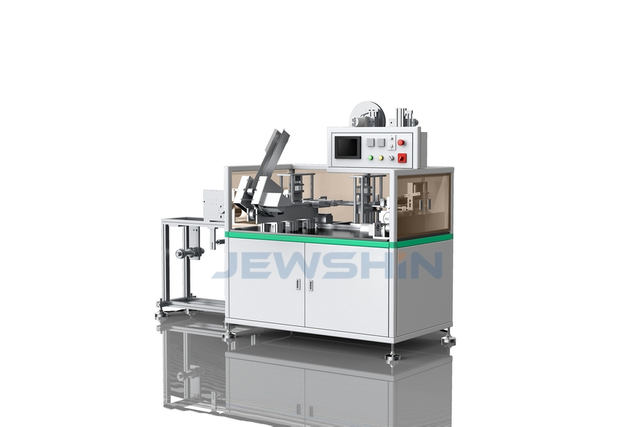
The overall price of an industrial automatic packaging machine depends on output rate, package format, product behavior, filling accuracy, controls, safety requirements, inspection equipment, and line integration. A 30-pack-per-minute system may use a simpler feeder and fewer servo axes than a 120-pack-per-minute line, while multi-format production can add tooling and automatic adjustments. In a plant running 2 shifts for 300 days per year, even a 1% difference in availability can equal about 48 production hours. Purchase price therefore needs to be compared with usable output, labor hours, material loss, maintenance, and expected service life.
Machine scope comes first because the phrase “automatic packaging machine” can describe anything from a single filling-and-sealing unit to a line containing feeding, weighing, forming, sealing, coding, inspection, rejection, cartoning, and case handling. A line with 8 coordinated stations needs more motors, sensors, guarding, PLC inputs, software, conveyors, and factory testing than a machine performing 2 operations.
That scope becomes more expensive as speed rises. A system designed for 25–40 packs per minute can often tolerate longer motion cycles, while equipment targeting 80–120 packs per minute needs faster product feeding, sealing, discharge, and communication between stations. If one cycle is delayed by only 0.2 seconds, the effect becomes much larger when a line is expected to produce millions of packs per year.
At 60 packs per minute, 16 operating hours per day and 300 days per year, theoretical annual production reaches 17.28 million packs. A 2% loss in usable output represents about 345,600 packages before product cost is considered.
Higher speed therefore cannot be priced separately from reliability. Suppliers normally have to increase frame stiffness, servo capacity, sensor response, motion-control performance, and conveyor stability as cycle times fall. A quoted maximum of 100 packs per minute is less useful when the customer's real product can run steadily at only 70, so acceptance testing should use representative products and packaging materials.
Product behavior then determines how difficult that stable speed is to achieve. Free-flowing granules can be handled with relatively standard weighing equipment, while fine powders may require auger dosing and dust extraction. Liquids can require pumps and anti-drip filling nozzles; fragile foods may need reduced drop heights; irregular parts may require bowl feeders, vision-guided handling, or specially designed orientation equipment.
A practical quotation therefore needs real samples. Testing 20 ideal pieces is rarely enough when size, moisture, surface friction, or shape varies across production. A trial using several hundred packages provides more useful information about jams, feeding consistency, seal contamination, and rejected packs, especially when the machine will operate for 2,000–5,000 hours per year.
Packaging format adds another layer of cost because film, pouches, cartons, trays, bottles, and other containers require different handling methods. A machine dedicated to one 200 × 300 mm pouch can use fixed or manually adjusted components, while a plant running 6 package sizes may need interchangeable tooling, servo positioning, stored recipes, and adjustable guides.
| Production requirement | Typical engineering effect | Cost impact |
|---|---|---|
| One package format | Fixed tooling, fewer adjustments | Lower |
| 3–6 formats | Change parts and stored settings | Moderate |
| Frequent SKU changes | Faster or automatic adjustment | Higher |
| 80+ packs/min | Faster motion and feeding | Higher |
| Inspection on every pack | Sensors, cameras or weighing | Higher |
Format flexibility leads directly to changeover time. If a factory makes 5 product changes per day and each manual change takes 30 minutes, 2.5 production hours are unavailable. Reducing each change to 10 minutes returns roughly 1 hour and 40 minutes per day; across 250 production days, that is about 417 hours.
Automatic adjustment raises the machine quotation because additional servo axes, position sensors, recipes, and control programming are required. The financial case depends on production mix: a plant changing format twice per month gains far less from automatic changeover than one making 4–8 changes every shift.
Filling accuracy can have an even larger annual effect. Consider a line producing 100,000 packs per day. An average overfill of 1 gram gives away 100 kg of product every day; across 300 days, that becomes 30 metric tons. Reducing average overfill from 1.0 gram to 0.5 gram cuts the annual giveaway by 15 metric tons.
For that reason, higher-priced load cells, multihead weighers, auger controls, or fine-feed dosing stages can be financially reasonable. Accuracy should still be specified as an operating range rather than a single ideal number because product density, particle size, temperature, and feeding consistency can change during an 8- or 16-hour production day.
A supplier claiming ±1% filling accuracy should state the tested product, target weight, sample size, line speed, and measurement method. “±1%” based on 10 controlled packs is not equivalent to performance measured across 1,000 consecutive production packs.
Once filling is stable, packaging-material control becomes important. A line producing 17.28 million packs annually can consume a large amount of film, labels, cartons, or pouches. Even a 0.5% reduction in rejected packaging material can matter when each package contains several separate consumables.
Sealing quality affects that loss rate. Temperature stability, pressure, dwell time, jaw alignment, and film tension all influence seal consistency. Machines working with several laminated films may require independent temperature zones and recipe settings rather than one fixed sealing arrangement, adding controllers, heaters, sensors, and software.
Electrical architecture creates another price difference that is easy to miss in photographs. A machine may contain a PLC, HMI, 4–12 servo axes, variable-frequency controls, safety relays, temperature controllers, photoelectric sensors, encoders, and pneumatic valves. Brand, specification, spare-part availability, and local service coverage all influence the quotation.
The same applies to mechanical construction. Food and pharmaceutical packaging commonly requires stainless-steel product-contact areas, while washdown applications may require much broader stainless construction and protected electrical hardware. A machine expected to run 16 hours per day for 10 years faces a very different duty cycle from equipment used for one 8-hour shift during seasonal production.
Safety requirements then affect both electrical and mechanical design. Machinery supplied into Europe may need engineering and documentation consistent with applicable EU machinery safety requirements, while equipment for North American plants may be specified around local electrical and workplace standards. Guard doors, interlocks, emergency-stop circuits, safety relays, protected access areas, and documented risk assessment all add components and engineering hours.
Inspection equipment can add another substantial layer. A simple presence sensor may only confirm that a product reached the next station, while checkweighing, barcode verification, vision inspection, metal detection, X-ray inspection, or seal checking can examine every package. At 100 packs per minute, an inspection station handles 6,000 packs per hour and must reject defective units without interrupting normal flow.
Data requirements can raise the specification further. A stand-alone machine may only show production count and alarms on its HMI. A connected 2026 factory may request batch records, downtime categories, reject counts, user access levels, recipe history, Ethernet communication, and interfaces with MES or SCADA systems.
That communication becomes more complicated when the packaging unit is only one part of a line. A filler may need to slow when downstream equipment stops, while a cartoner must receive products at controlled spacing. Integrating cartoning machines, checkweighers, labelers, case packers, and palletizing equipment requires mechanical interfaces plus coordinated signals and fault handling.
A line with 6 separate machines from different suppliers may therefore require considerably more commissioning than a stand-alone unit. Engineers need to establish speed references, accumulation rules, emergency-stop behavior, upstream/downstream signals, rejection logic, and restart procedures. A 5% mismatch in effective capacity between stations can create recurring queues or starvation even when every machine meets its individual specification.
Factory acceptance testing should reflect those interactions. A useful FAT can include representative materials, defined speeds, several package formats, alarm tests, safety checks, accuracy measurements, and an agreed continuous run. Testing 1,000 consecutive packages gives a much better view of recurring feeding or sealing problems than demonstrating 20 successful cycles.
Site acceptance adds installation conditions that cannot always be reproduced at the supplier's factory. Floor level, electrical supply, compressed-air quality, ambient temperature, upstream product delivery, operator practices, and actual packaging materials can affect performance. International projects may also require engineer travel, accommodation, local contractors, and several days of commissioning.
Shipping belongs in the same cost comparison. A compact machine that fits into one standard shipping unit can have lower logistics costs than a long integrated line requiring several containers, reinforced export packaging, separate electrical cabinets, and on-site reassembly. Import duties, local taxes, inland freight, unloading, and positioning may further widen a 10% difference between ex-works quotations.
After installation, labor often becomes one of the largest differences between alternatives. Suppose Machine A requires 3 operators per shift and Machine B requires 2. With 2 shifts per day, 250 working days, and 8-hour shifts, the difference equals 4,000 labor hours per year. The relevant comparison is the local fully loaded hourly labor cost multiplied across the expected ownership period.
Downtime can be priced in the same way. At 60 packs per minute, one hour of stopped production removes up to 3,600 packs of theoretical capacity. Forty additional downtime hours per year equal 144,000 packages, before considering restart waste, maintenance labor, missed orders, or overtime.
Spare-part availability therefore deserves attention before purchase. Wear components such as sealing jaws, belts, heaters, bearings, cutters, suction cups, and pneumatic seals may need periodic replacement. A machine with a 98% availability target still permits about 96 hours of unavailable time across 4,800 scheduled annual production hours, so maintenance planning materially affects delivered output.
Supplier engineering experience also influences price because custom work consumes design, programming, machining, assembly, and testing time. A standard machine already proven on hundreds of similar packages usually needs less project engineering than a system requiring a new feeder, special tooling, unusual package geometry, or restricted factory footprint.
Customization should consequently be separated from ordinary specification upgrades. Changing an HMI language is relatively limited work; developing a feeding mechanism for an irregular product can require repeated trials using 100, 500, or 1,000 samples, new machined parts, software revisions, and another validation run.
The final comparison can be organized around annual cost rather than quotation price:
-
Purchase and installation cost spread across the planned 5–10 year service period.
-
Operators required per shift and annual labor hours.
-
Product giveaway measured as grams or milliliters per package.
-
Packaging-material rejection percentage.
-
Scheduled and unscheduled downtime hours.
-
Spare parts and preventive maintenance.
-
Electricity and compressed-air consumption.
-
Format-change frequency and minutes lost per change.
-
Accepted packages produced per scheduled production hour.
A €40,000 higher purchase price can be recovered in less than 2 years when the more expensive system reduces annual operating cost by €25,000. Conversely, paying for automatic format adjustment, high-speed inspection, or extensive factory connectivity provides little financial benefit when a line runs only 1 shift, one SKU, and 1,000 production hours per year.
For procurement, comparable quotations need the same boundaries: product samples, target packs per minute, package dimensions, annual operating hours, acceptable filling tolerance, number of formats, inspection scope, electrical standard, safety specification, upstream and downstream interfaces, FAT duration, installation responsibility, training, warranty, and spare parts. Without the same scope, two quoted prices are not measuring the same machine.